

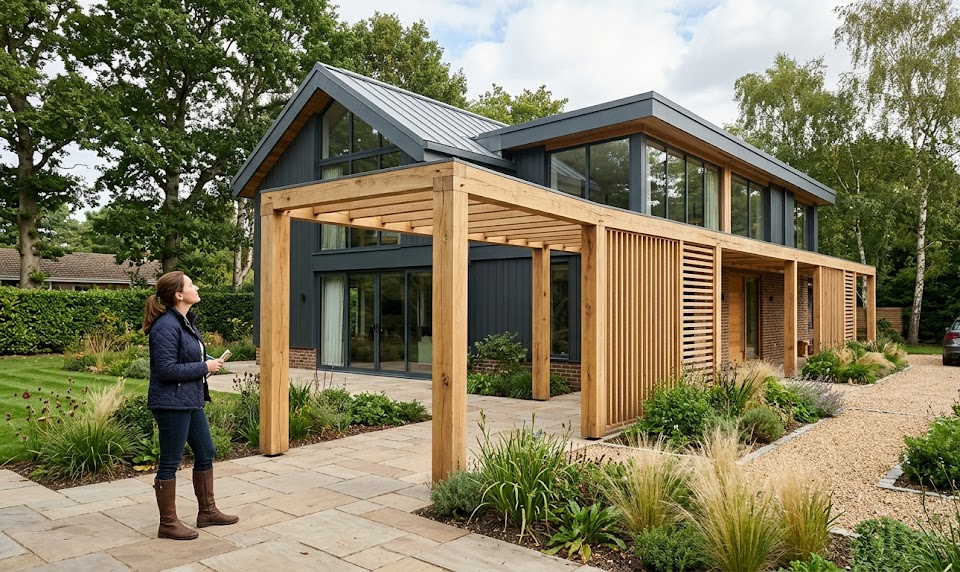
The demand for more living and working space in homes in the UK is at an all-time high. Remote work and the requirements of growing families are pushing homeowners and developers to look beyond the main property to make the most of the space available.
According to recent ONS data, 28% of working adults in Great Britain worked remotely from January to March 2025. Over the last four years, the requirement for a professional environment has risen steadily, with more than one in four employees now seeking a dedicated workspace that goes beyond a makeshift desk in a spare room.
While traditional brick extensions have been the common choice, their high costs, long construction times, and complicated planning processes can be overwhelming. This has led to creating custom timber garden buildings.
These buildings look nothing like the flimsy, flat-pack sheds of the past. Today’s garden offices, workshops, and summer houses are built to a high standard that matches the main home. By adding value and providing flexible, year-round space, these timber structures help a property stand out in a competitive market.
Why Bespoke Beats Standard Every Time
A mass-produced garden building is made to appeal to many homebuyers. In contrast, a custom timber structure is designed to fit a single property and owner perfectly.
The difference is in the details:
- Door placements can frame a garden view.
- Windows can be positioned to catch the morning light.
- Dimensions can match the main house rather than clash with it.
When a project requires more than a standard storage solution, the value lies in the details of the construction. Several developers now opt for structures that are made to order rather than mass-produced.
As the team at Elfords notes, choosing a building that is crafted from scratch allows for specific door and window placements that align with the main property’s architectural lines, making sure the addition looks like an intentional part of the home rather than an afterthought.
This careful approach is what sets a premium finish apart from a quick fix.
Timber Types That Work Best for Your Property
The type of wood and the design choices you make greatly affect how a garden building looks and how long it lasts. Choosing the right options means the building will look just as good in twenty years as it did when it was first built.
| Timber Type | Best For | Key Benefit |
| Redwood Pine | Classic and cottage style homes | Affordable, takes paint and stain well |
| Siberian Larch | Contemporary and modern builds | Naturally durable, weathers to silver-grey |
| Western Red Cedar | High-end builds and garden rooms | Aromatic, resistant to rot, lightweight |
| Oak | Heritage and rural properties | Extremely strong, ages beautifully |
In modern homes, cladding styles such as shiplap or square-edged boards complement clean architectural lines. For older homes, featheredge cladding adds character without looking out of place.
Insulation and Glazing for Year-Round Use
A garden building is only a good investment if you can use it throughout the year. The British weather can be harsh, and a poorly insulated building becomes unusable from October to March. This defeats the purpose.
For a garden office, studio, or wellness space to work perfectly, the walls, floor, and roof need proper insulation. Good thermal performance determines if it can be a weekend retreat or a serious workspace.
Double-glazed windows and doors are important. They help keep heat in during winter, reduce condensation, and make the space quieter when you want to focus. Property listings now highlight year-round usability as an important feature because buyers value comfort and energy efficiency.
According to the Energy Saving Trust, upgrading from single glazing to A-rated double glazing can save homeowners £140 a year on energy bills in Great Britain. For a timber garden building that you use all year, improving its insulation is essential. This makes it a functional workspace that you can use in the winter, rather than one that just sits empty.
How to Furnish a Timber Garden Building
The interior of a timber garden building needs as much attention as the exterior. If you rush the furnishing stage with mismatched items, it can ruin the building’s quality.
Here are some helpful tips:
- Modular furniture works well in garden offices and studios. It fits the space and is easy to store without making the room feel cluttered.
- Use natural fabrics like linen, cotton, and wool. They add warmth and match the timber walls without clashing.
- Stick to neutral colours and add one warm accent. This keeps the space relaxed and focused.
- Built-in shelves that match the structure’s timber create a seamless and premium look.
- Good lighting is essential. Use a mix of ambient, task, and accent lighting to keep the space looking great at any time of the day.
Planning Permission Rules for Garden Buildings
Many UK homeowners think that you need planning permission for any garden building. However, the rules are simpler if you stay within certain limits.
In England, most outbuildings do not need planning permission if:
- The building is single-storey with a maximum height of 2.5 metres at the eaves.
- The maximum height for a dual-pitched roof is 4 metres, and for other types, it is 3 metres. However, if the building is within 2 metres of a property boundary, the whole structure, including the roof ridge, must not be taller than 2.5 metres.
- The structure covers less than 50% of the garden area.
- The building is located behind the front of the primary residence.
- The property is not a listed building or in a special area like a National Park or Area of Outstanding Natural Beauty.
Scotland, Wales, and Northern Ireland have their own rules on permitted development, so always check with your local planning authority before starting any work.
Tip: A well-placed garden building provides extra space while framing views, adding depth, and creating a focal point that enhances your outdoor enjoyment.
For clearer guidance on what is and is not allowed under permitted development, take a look at this planning permission guide that covers the important rules for England in one place.
Conclusion
Bespoke timber structures are a smart way to add space to your property without the high costs or hassle of a traditional brick extension. When built with care and purpose, these structures blend in well and enhance the existing property’s performance.
Investing in this type of building not only meets your immediate space needs but also adds value to your property and improves your lifestyle in the UK.If you need help choosing furniture that works in a garden building or any other space in your home, contact us, and we will point you in the right direction.

